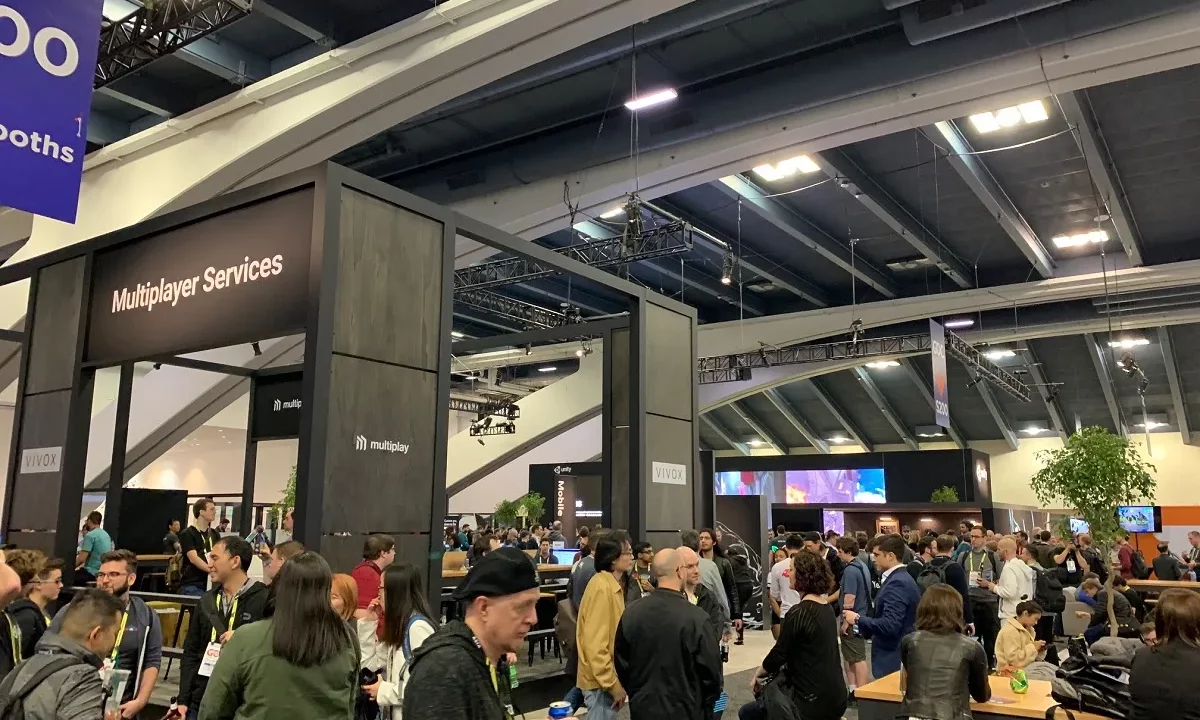
Following Multiplay’s acquisition by Unity, I joined the product marketing team at Unity, which mostly collaborated from the HQs in Copenhagen and San Francisco. And what a brilliant experience it was.
Over the next few years, I was given full autonomy to promote my products around the globe and support the product and engineering teams in developing game-changing technology, from infrastructure to matchmaking and professional services.
Go-To-Market (GTM) Process
At Unity, I helped develop the GTM process. This process allowed the product marketing team to consistently brief the GTM teams across all key products and services within three or four areas of focus known as drives. It included three key stages;
The Business Plan examined the problem space and market opportunity and pitched for the investment required to win.
The Brief, a detailed strategic document that includes valuable data about the problem space, our solution, our positioning hypothesis, distribution plans, the buying party, users, pricing, goals and objectives, marketing strategy and how to sell.
And finally, the GTM Plan. At this stage, the GTM team collaborated to create the weekly and tactical plans following the GTM Kick-Off, a briefing workshop with all GTM leaders in attendance. This weekly plan gave everyone a detailed tactical calendar across all channels, including crucial events, product beats, and other milestones we chose to promote as a team.
The GTM Team included specialists in the following channels: Business Development, Market Research, Comms, Demand Generation, Web and Digital Marketing, Events, Pricing, Partner Marketing, Brand and design, Social and community, and Evangelism.
The process was optimised over several annual cycles, allowing the GTM team to successfully promote our products and services and support the pipeline and revenue build needed to achieve our goals.
Content was, still is, and most likely will always be king
The games industry is very secretive. It takes a long time to create a game, and developers don’t want to give away market share for any new patterns, secret processes, or critical points of differentiation to the competition. However, it is a very small industry, and developers speak to other developers for their advice on how to solve a particular problem. Advocacy and Word of Mouth are crucial. This insight meant that we needed to tell our success stories in a way that engaged a large percentage of our target audience in a credible and influential way.
The best way to do this was by partnering with our existing customers and allowing them to take the floor through our content, speaking engagements, and written or video success stories. Our audience wanted to avoid sitting through a sales pitch or demo but did want to learn from the best developers in the industry how they built and launched their multi-million or, if they are super smart and a little lucky, their billion-dollar games.
Early on, I hired a content specialist to focus entirely on this problem, partnering with me as the product marketeer. This model worked well and was rolled out across the team, with most product marketers within Unity eventually working with a dedicated content specialist to tell stories and promote their products and services.
Top three tactics that drove the most impact
1. GDC & Unite Event Talks
Sponsored talks at GDC and Unity’s events like Unite were a fantastic way of engaging our audience in person. We partnered with excellent customers like Respawn who would be kind enough to share the stage and tell their story. This approach typically drew in a far greater audience in the show than our technology could alone alone and way more views on YouTube and social channels in our post-show promo.
2. Account-Based Marketing
Efficient GTM is even more crucial now than back in the days of cheap money but given the industry is small with only a 1000 or so studios and publishers that we wanted to partner with, we created small and targeted account lists to approach with our content. This allowed us to target specific studios, publishers and individuals with insight that challenged and helped their decision making around the problems they were trying to solve.
3. Personalised Content
On average, four people from a studio or publisher are involved in the buying decision for technology in games. Selling to teams means that GTM teams need to consider a multi-threaded approach to sales and marketing to engage all decision-makers and address their concerns. For tech like Unity’s at a mid-market studio this would typically be the lead engineer, a founder, a lead producer and often a business development specialist. Coupling personalised content with ABM meant that we could surface useful content for all personas, helping them make meaningful and more intelligent decisions for their business.
Results
Unity’s Multiplayer Services grew from a starting point of $300K to over $40m ARR during my tenure and to over $100m following the launch of its self-service offering as part of Unity’s Unified Dashboard. A collaborative approach across the GTM team and a strong partnership with our customers were critical to this success during the sales-led phase of our growth.
What would I approach differently?
Positioning is really hard to get right. Looking back at this time I went a little solo with this work during one particular cycle. I’ve learnt its better to workshop this out with key stakeholders that hold a strong opinion on our value propositions and GTM strategy. Since this time I’ve worked hard to involve a wider team to ensure that key stakeholders feel that they have contributed towards the positioning hypothesis and all parties learn from the results as we continue to experiment with our stories, content and messaging.
Need support?
Have you recently founded a business? Are you planning to launch a new product, or are you considering a pivot and need help with your positioning and go-to-market strategy? If so, contact me today to discuss your plans.